Want more ideas and freebies?
Get my free resource library with digital & print activities—plus tips over email.
Join for Free Resources →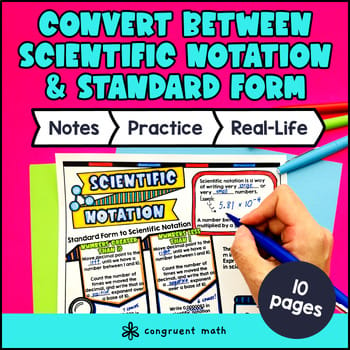
$4.25
Ever wondered how to teach scientific notation in an engaging way to your eighth-grade students?
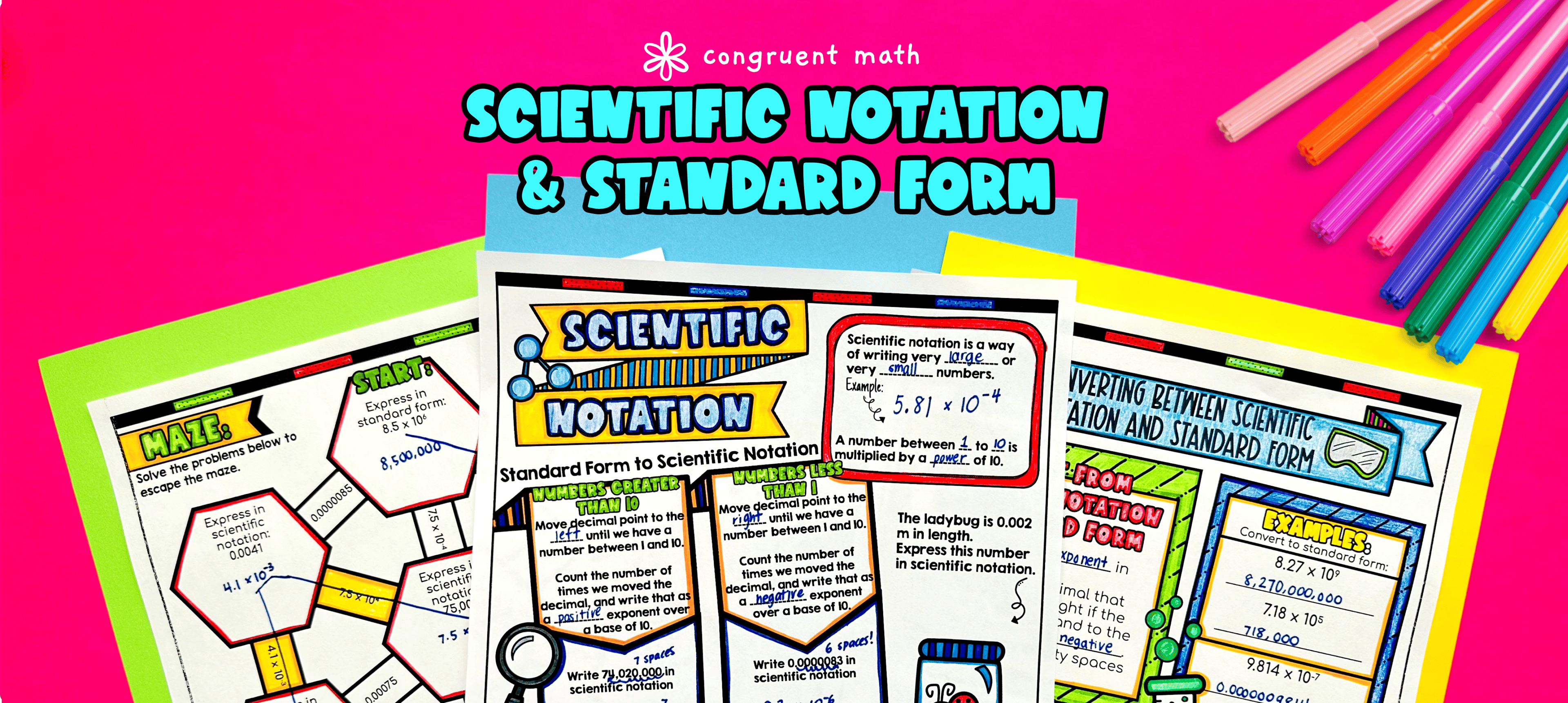
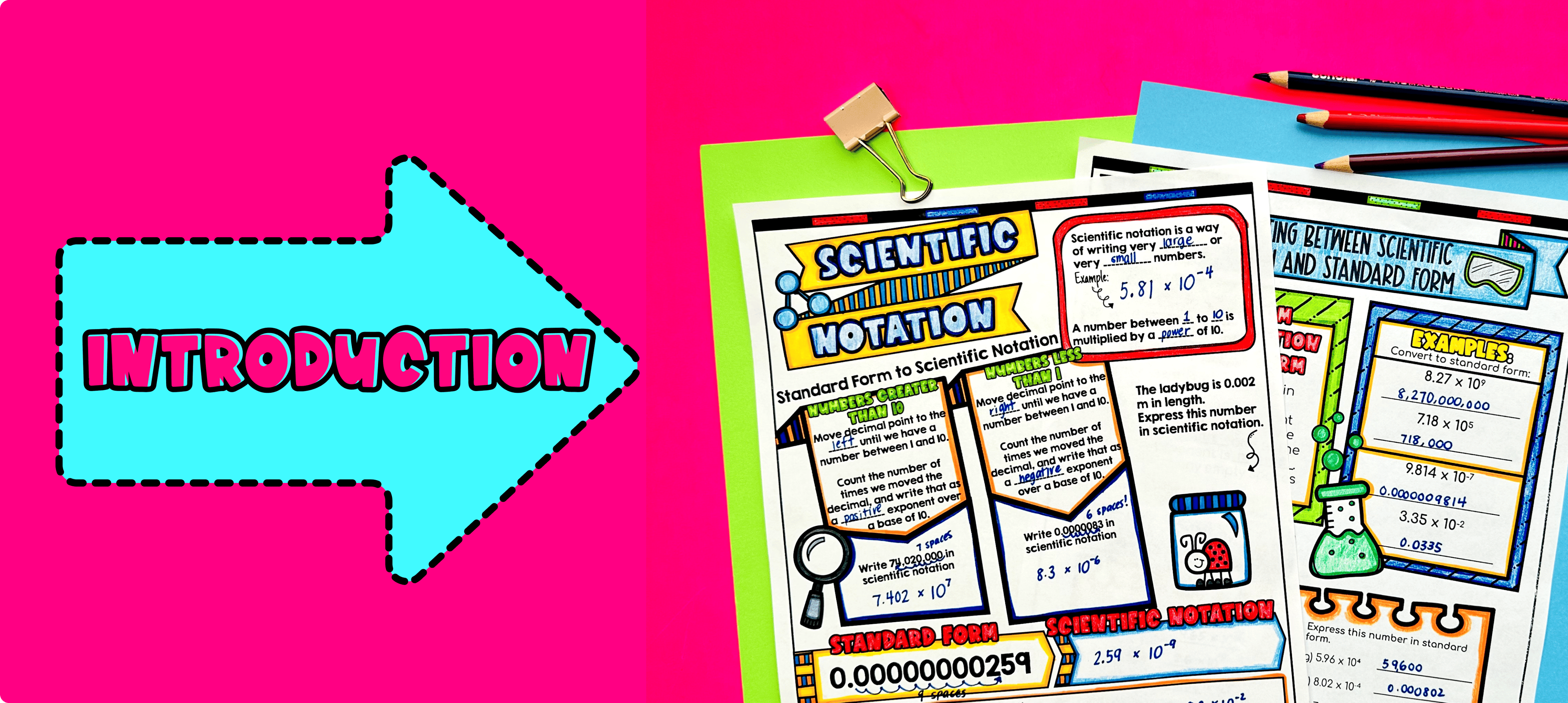
In this lesson plan, students will learn about scientific notations and their real-life applications. Through artistic, interactive guided notes, check for understanding, a doodle & color by number activity, and a maze worksheet, students will gain a comprehensive understanding of converting between standard form and scientific notations. They will learn the step-by-step process and practice with various examples and exercises.
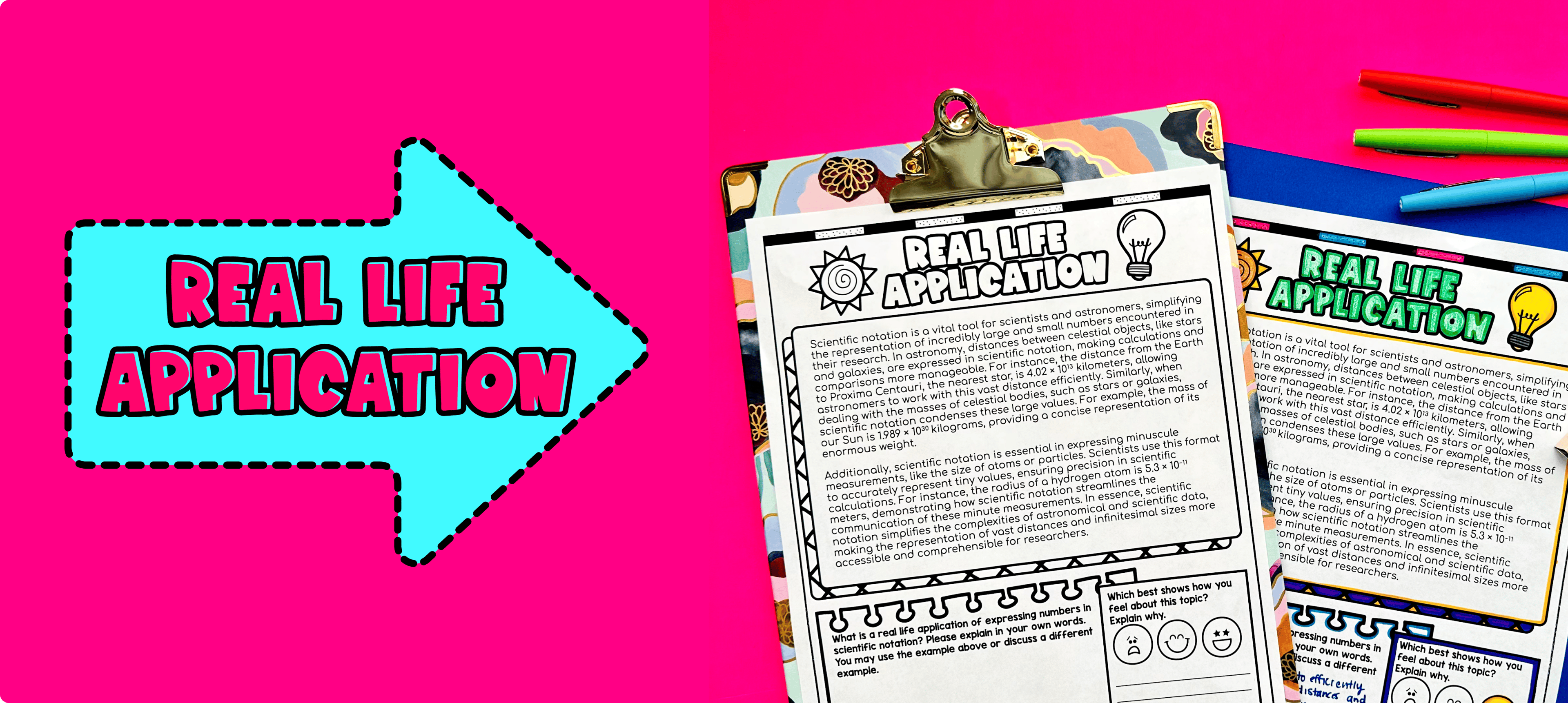
The lesson concludes with a detailed real life example that explores how scientific notation is used in real-world scenarios. Students will read and write about the practical applications of expressing numbers in scientific notations.
$4.25
After this lesson, students will be able to:
Before this lesson, students should be familiar with:
As a hook, ask students why it is important to be able to express numbers in scientific notation. Refer to the last page of the guided notes, where students can read and write about real-life uses of expressing numbers in scientific notations. This will help students see the relevance and importance of the topic.
Use the first two pages of the guided notes to introduce the concept of scientific notation. Walk through the topic's key points, such as what scientific notation is, why it is used, and how to convert numbers between standard form and scientific notation.
Based on student responses, reteach any concepts that students need extra help with, especially in understanding the basic principles of scientific notation. If your class has a wide range of proficiency levels, you can pull out students for reteaching, and have more advanced students begin work on the practice exercises.
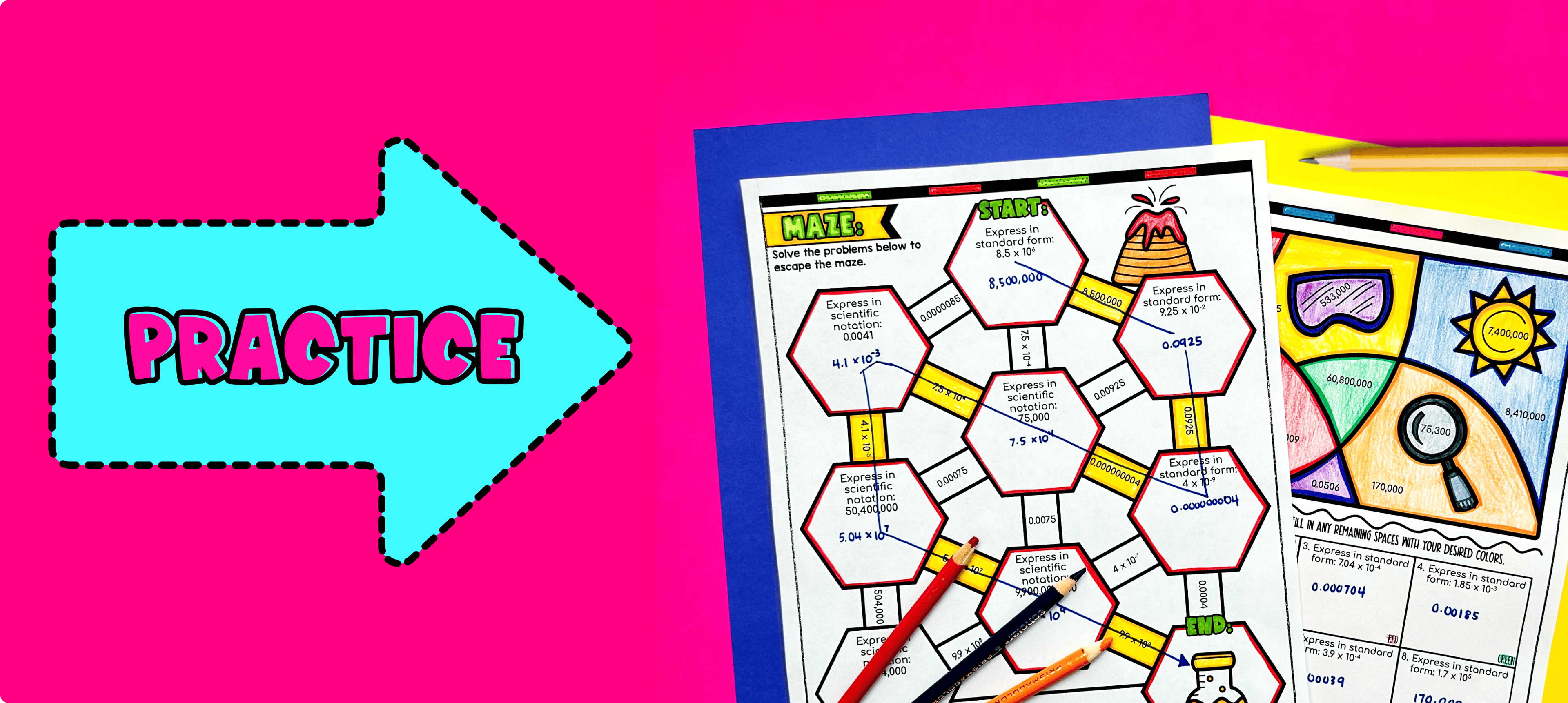
Have students practice converting between standard form and scientific notation using the practice sections at the bottom of the guided notes as well as the maze activity (page 3 of guided notes). Walk around the classroom to answer any student questions and provide guidance as needed.
Fast finishers can then move on to the color by number activity worksheet for additional practice (page 4 of guided notes). You can assign this maze activity as homework for students to complete for the remainder of the class.
Bring the class back together, and introduce the concept of real-world applications of expressing numbers in scientific notations. Use the last page of the guided notes to allow students to read about a detailed example of scientific notation in real life.
Explain to the students that scientific notation is commonly used in scientific fields such as astronomy, physics, and chemistry to represent extremely large or small numbers more conveniently.
To further illustrate the real-life application of scientific notation, provide examples such as:
Encourage students to think of other real-life examples where expressing numbers in scientific notation could be useful.
If you're looking for digital practice for converting between standard form and scientific notation, try my Pixel Art activities in Google Sheets. Every answer is automatically checked, and correct answers unlock parts of a mystery picture. It's incredibly fun and a powerful tool for differentiation.
Here are some activities to explore:
A fun, no-prep way to practice scientific notation and standard form is Doodle Math—they're a fresh take on color by number or color by code. It includes multiple levels of practice, perfect for a review day or sub plan.
Here are some activities to try:
Get my free resource library with digital & print activities—plus tips over email.
Join for Free Resources →