Want more ideas and freebies?
Get my free resource library with digital & print activities—plus tips over email.
Join for Free Resources →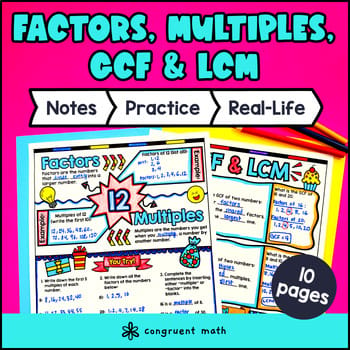
$4.25
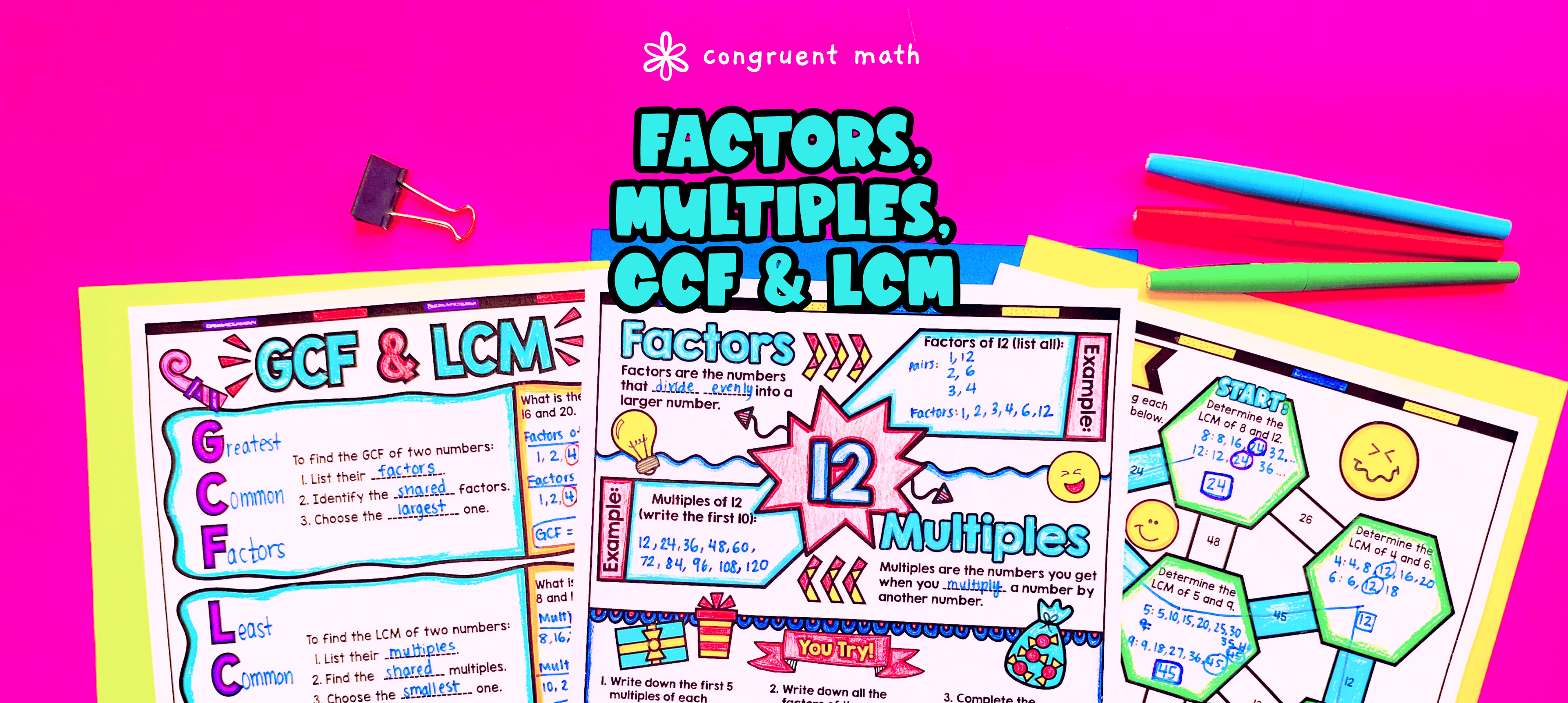
Ever wondered how to teach greatest common factors (GCF) and least common multiples (LCM) in an engaging way to your 6th-grade students?
In this lesson plan, students will learn about GCF and LCM and their real-life applications. Through artistic, interactive guided notes, check for understanding, a doodle & color by number activity, and a maze worksheet, students will gain a comprehensive understanding of these important math concepts.
The lesson culminates with a real-life example that explores how GCF and LCM can be applied in practical situations.
$4.25
After this lesson, students will be able to:
Before this lesson, students should be familiar with:
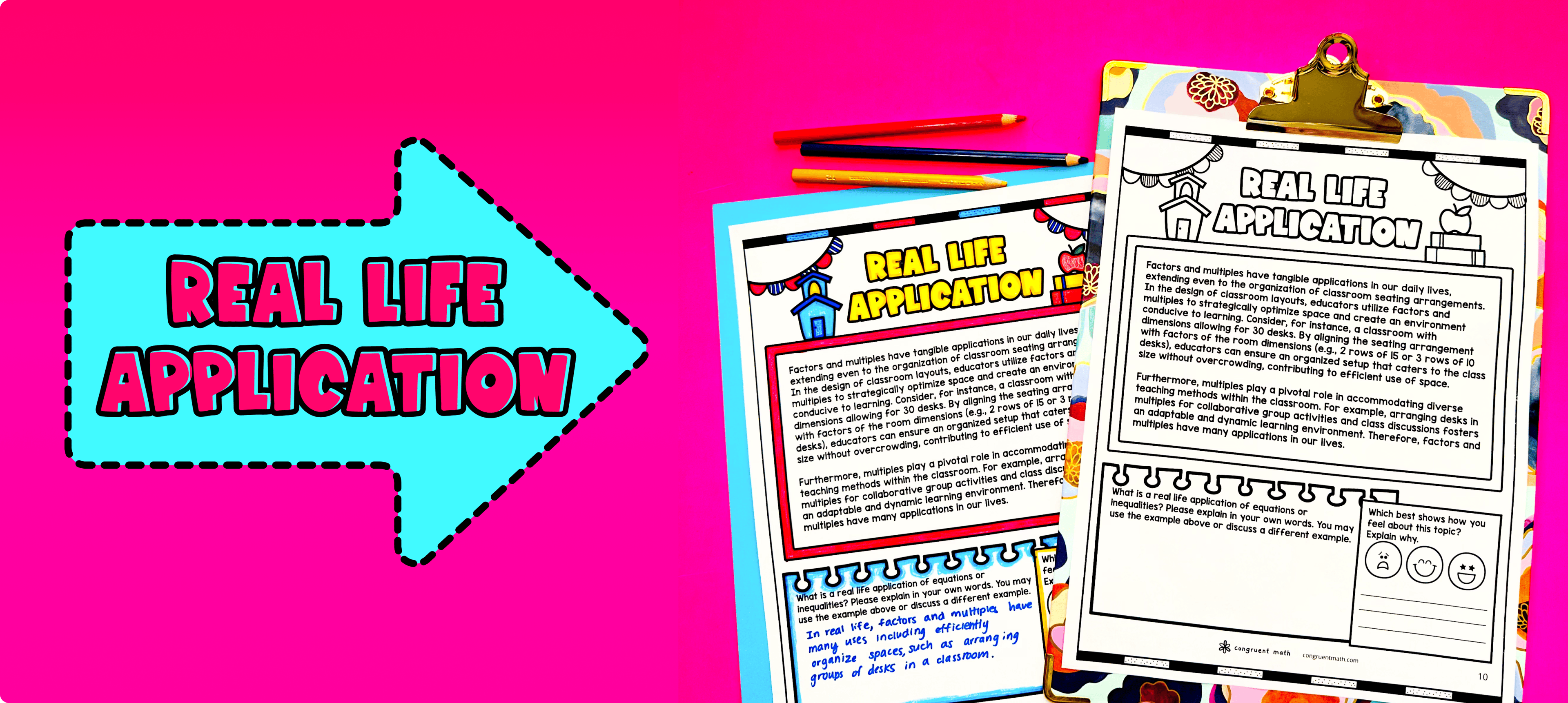
As a hook, ask students why understanding greatest common factors (GCF) and least common multiples (LCM) is important in everyday life. You can refer to the real-life application described on the last page of the guided notes, where students read and write about the real-life uses of these math skills.
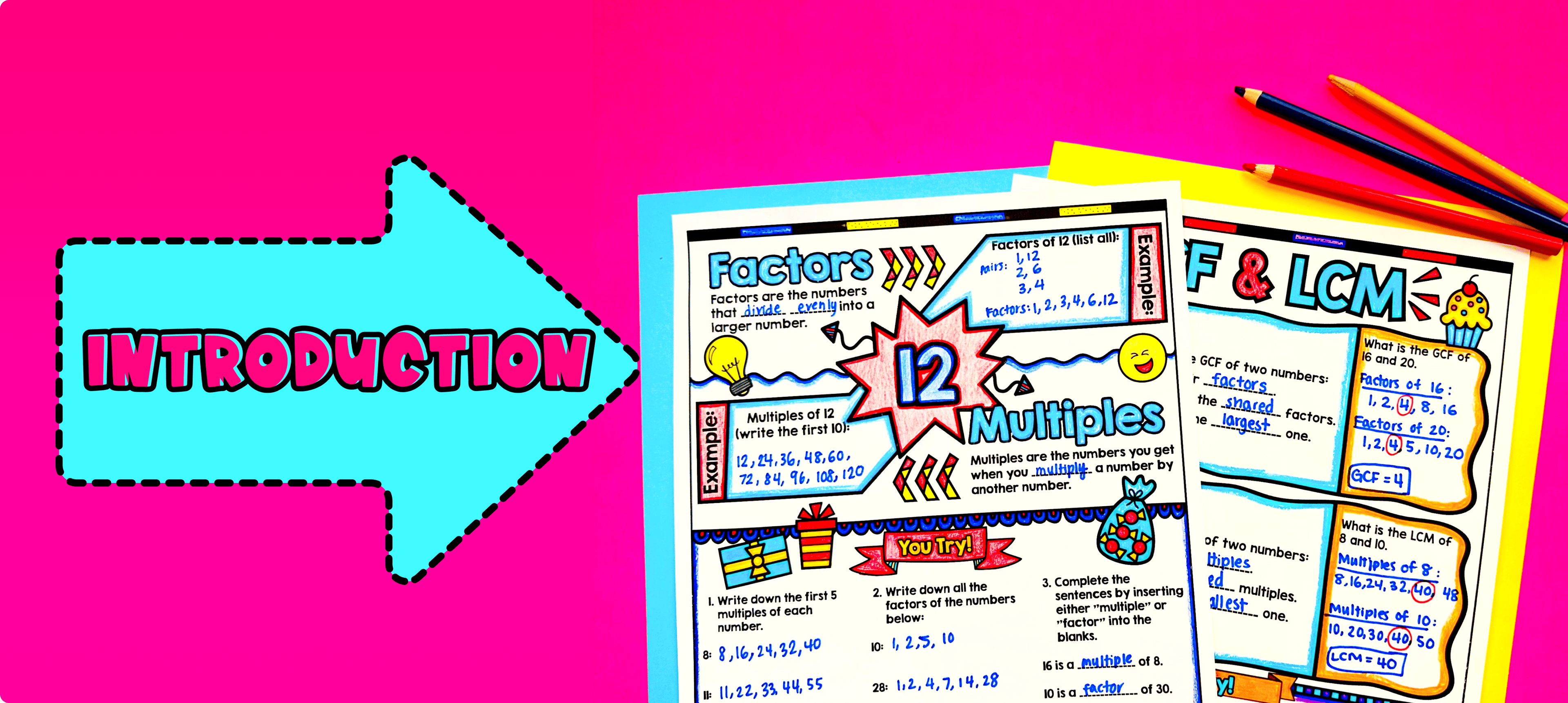
Use the first page of the guided notes to introduce the topic of factors vs. multiples. Students fill in the guided notes to learn key math vocabulary as well as practice how to find factors and multiples of numbers. Then, use the second page of the guided notes to introduce the greatest common factors (GCF) and least common multiples (LCM). Emphasize that GCF is the largest number that divides evenly into two or more numbers, while LCM is the smallest positive number that is divisible by two or more numbers. It is helpful to walk through the first few examples on the guided notes with your students. Then allow them to practice the rest in groups or independently. Refer to the FAQ below for a walk-through on this, as well as ideas on how to respond to common student questions.
Based on student responses, reteach any concepts that students need extra help with. If your class has a wide range of proficiency levels, you can pull out students for reteaching, while more advanced students begin working on the practice exercises.
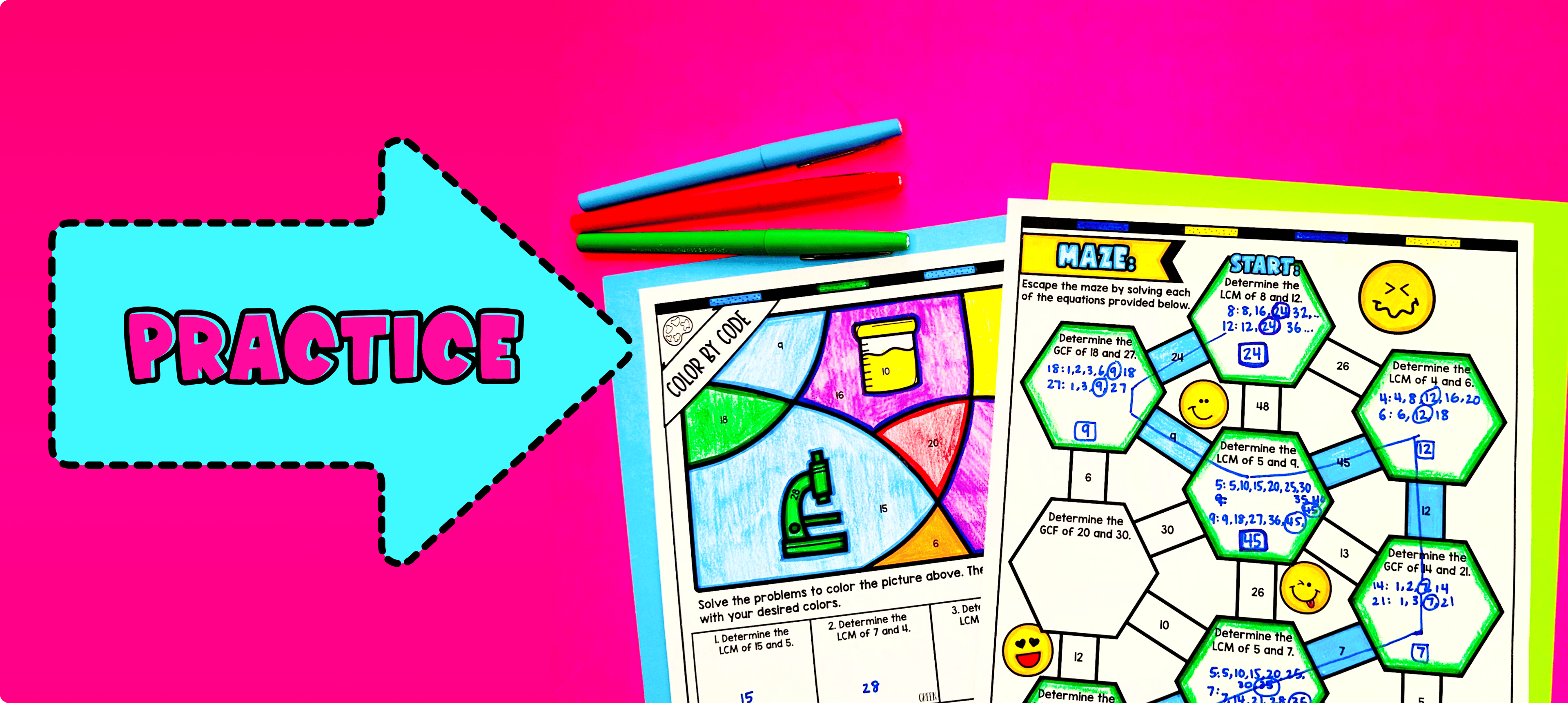
Have students practice finding the greatest common factor (GCF) and least common multiple (LCM) using the practice worksheet provided in the resource. This guided notes resource includes a fun maze (page 3) and color by number (page 4) as practice activities for students to work on.
Walk around the classroom to answer any questions students may have while they are working on the practice worksheet.
Use the last page of the guided notes, real life applications, to bring the class back together, and introduce the concept of real-life applications of greatest common factors (GCF) and least common multiples (LCM). The students will read about real life situations where GCF and LCM comes in handy. Then, they will reflect on how GCF and LCM can be used in other real life scenario.
For example, a real-life application of GCF and LCM is in determining the schedule of activities or events. For instance, if you have a set of activities that need to be repeated in a cycle or pattern, finding the LCM will help you determine how long it will take for the activities to align again. This can be particularly useful in planning sports events, music concerts, or other recurring events.
If you’re looking for digital practice for Factors, Multiples, GCF, and LCM, try my Pixel Art activities in Google Sheets. Every answer is automatically checked, and correct answers unlock parts of a mystery picture. It’s incredibly fun, and a powerful tool for differentiation.
Here are 2 activities to explore:
A fun, no-prep way to practice Factors, Multiples, GCF, and LCM is with Doodle Math — they’re a fresh take on color by number or color by code. It includes multiple levels of practice, perfect for a review day or sub plan.
Here are 5 activities to try:
Get my free resource library with digital & print activities—plus tips over email.
Join for Free Resources →